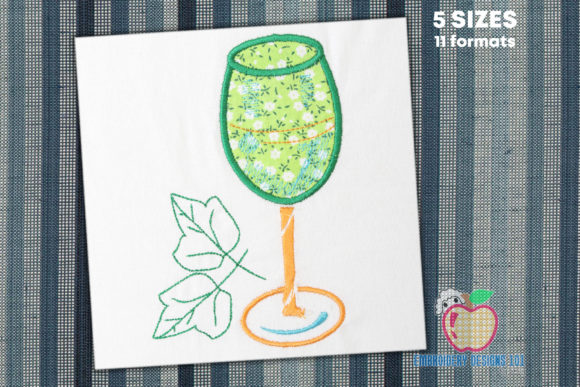
Wine Glass with Leaf Applique: A Designer Review
As an embroidery designer who has spent years digitizing files and consulting with small business owners, I look at every new machine embroidery design through a specific lens. It is not just about whether the artwork looks pretty on a screen; it is about how it performs in the real world of commercial production. When I first reviewed the Wine Glass with Leaf Applique, my immediate impression was one of understated elegance mixed with rustic charm. This is not a loud, aggressive logo. Instead, it feels friendly, organic, and distinctly handmade. For businesses in the hospitality sector, boutique retail, or artisanal crafts, this visual personality is a powerful asset.
The product description notes that this embroidery file comes in five sizes, ranging from 4 inches to 8 inches. This versatility is crucial for professional use. It means the design is suitable for hoop sizes 4x4, 5x7, 6x10, 8x8, and 8x12. Having this range allows a single design asset to serve multiple purposes within a brand’s ecosystem, from a subtle chest logo on a staff uniform to a bold statement piece on a tote bag.
Real-World Applications for Small Business Merch
Let us imagine a local café or a boutique winery looking to elevate their small business merch. The Wine Glass with Leaf Applique fits seamlessly into this narrative. Because the design incorporates applique, it reduces stitch count compared to a fully filled satin stitch design, which is beneficial for production speed and fabric stability. Here is how I envision this design working across various products:
- Staff Uniforms and Aprons: An apron embroidery project benefits greatly from this design. Placed on the upper left chest or near the pocket, the 4-inch or 5-inch size offers a professional mark that identifies staff without overwhelming the garment. The leaf element adds a touch of nature, suggesting fresh ingredients or organic practices.
- Custom Apparel and Caps: For cap embroidery, the smaller 4-inch size is ideal for the front panel. However, designers must be cautious with curved surfaces. The applique technique helps here, as the fabric patch lays flatter than high-density stitching, reducing puckering on structured caps.
- Tote Bags and Packaging: A tote bag design featuring the 8-inch version of this artwork creates a walking billboard for your brand. Canvas bags handle applique beautifully, and the contrast between the wine glass shape and the leaf detail stands out against natural fiber textures.
- Embroidered Patches: Creating an embroidered patch with this design allows for versatile branding. Patches can be ironed onto jackets, hats, or even used as hang tags for other handmade products. The clean lines of the wine glass ensure the patch remains legible even at smaller dimensions.
In the context of Kitchen and dining establishments, this design reinforces the theme of service and enjoyment. It is not just a generic icon; the addition of the leaf suggests growth, nature, and perhaps a farm-to-table ethos. This subtle storytelling enhances brand identity by connecting the visual asset to the company’s values.
Navigating Technical Challenges in Production
While the aesthetic appeal is strong, any experienced embroiderer knows that technical execution is where projects succeed or fail. When using the Wine Glass with Leaf Applique, there are specific areas where caution is required. The primary concern with any applique design is the registration of the placement stitch, the cut, and the cover stitch. If these are not aligned perfectly, the raw edges of the applique fabric may peek out, ruining the professional look of the finished product.
Furthermore, consider the stitch density and fabric texture. While applique generally uses less thread, the border stitches securing the applique piece must be dense enough to hold but not so dense that they cause perforation in lightweight fabrics. For dark uniforms, you must carefully select thread colors that provide sufficient contrast. A white wine glass on a black apron is classic, but ensure the leaf detail does not get lost if the thread color is too similar to the background.
Another critical factor is the hoop size selection. The product details state that detailed stitch count and sizes are shown in the product information. Before starting a large batch of commercial embroidery, always verify these details. If you are working with a 4x4 hoop, ensure you are using the smallest size variant to avoid hitting the hoop walls. For larger items like tote bags, the 8x12 hoop allows for the maximum 8-inch design, creating a bold visual impact.
Enhancing Brand Identity and Customer Trust
Why invest in a high-quality digital embroidery file like this? The answer lies in perceived value. Customers associate well-executed embroidery with quality and permanence. Unlike printed ink, which can crack or fade, embroidered logos convey durability and craftsmanship. When a customer receives a tote bag or wears a shirt with the Wine Glass with Leaf Applique, they are interacting with a tangible representation of your brand’s attention to detail.
This design supports visual consistency across different mediums. Whether it is on a menu cover, a staff shirt, or a gift item, the consistent use of this motif builds recognition. For Etsy sellers and crafters, offering items with this design can differentiate your handmade product from mass-produced competitors. It signals that care was taken in the creation process, fostering deeper buyer engagement and trust.
Practical Notes for the Embroidery Professional
Before you commit to full-scale production, I recommend a rigorous testing phase. Here is my checklist for integrating this design into your workflow:
- Test in Black and White First: Remove color variables to check the clarity of the design lines. Ensure the wine glass shape is distinct from the leaf applique.
- Check Small Patch Sizes: Run a test on the 4-inch size to ensure the details do not merge. Tiny lettering or intricate outlines can become muddy if the stitch length is too long for the scale.
- Review Thread Color Contrast: Select threads that complement your brand palette but also stand out against the chosen fabric. High contrast improves readability from a distance.
- Inspect Spacing and Registration: Verify that the placement stitch accurately guides the applique fabric. Misalignment is the most common error in applique work.
- Confirm Hoop Size and Stabilizer: Use the appropriate stabilizer for your fabric type. Cut-away stabilizer is often best for garments that will undergo frequent washing, while tear-away may suffice for decorative items.
- Create a Printable Mockup: Before stitching, use a printable mockup to visualize the design on the actual garment. This helps in client approval and prevents costly mistakes.
- Verify Commercial Licensing: Always confirm the license terms included with the design assets. Ensure you have the right to use the file for selling physical goods.
In conclusion, the Wine Glass with Leaf Applique is a versatile and professional addition to any embroidery library. It bridges the gap between decorative art and functional branding. By understanding its technical requirements and leveraging its aesthetic strengths, small business owners and embroidery professionals can create compelling custom apparel and merchandise that resonates with customers. Remember to check the specific stitch counts and size details provided in the product description to ensure optimal results for your specific Embroidery projects.